GEOTECHNICAL ENGINEERING
HOUSTON
HomeIn-Situ TestingField permeability test (Lefranc/Lugeon)

Field Permeability Testing (Lefranc & Lugeon) in Houston

Evidence-based design. Reliable delivery.

LEARN MORE

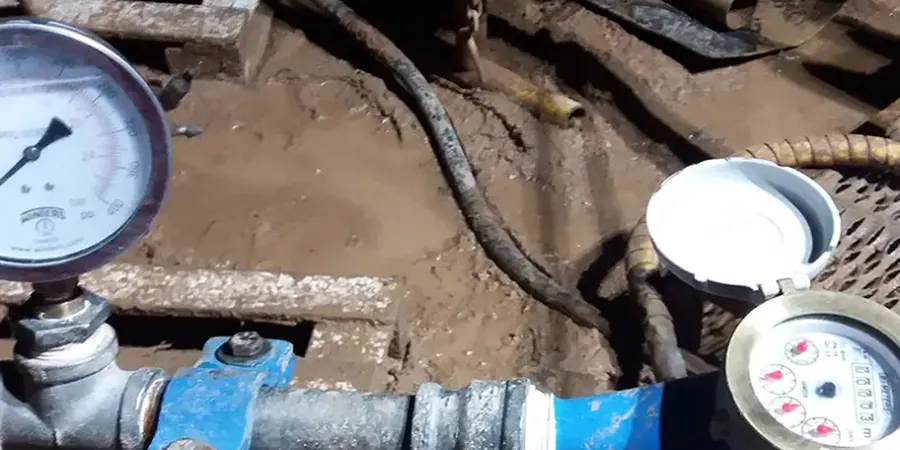
A steel slotted screen lowered into a borehole, a graduated reservoir maintaining constant head, and a precision pressure gauge monitoring every psi of injection—this is the core of our field permeability setup in Houston. The Lefranc test, run in the saturated clays beneath the 610 Loop, gives us a direct measurement of hydraulic conductivity in the Beaumont Formation. For the deeper, fractured layers encountered near the Energy Corridor, we switch to the Lugeon method, using a packer system to isolate specific intervals and pressurize the test section. Our lab's instrumentation is calibrated to ASTM D6391, ensuring that every flow reading translates into a reliable K value for your dewatering or grouting design. In a city where you can pump groundwater at one site and hit dry, stiff clay 200 feet away, knowing the actual in-situ permeability isn't a luxury—it defines the construction budget.

Lab permeability tests on small specimens miss the sand seams and fractures that control groundwater flow in Houston's layered formations—field testing captures what the ground actually transmits.
Our service areas

Methodology and scope

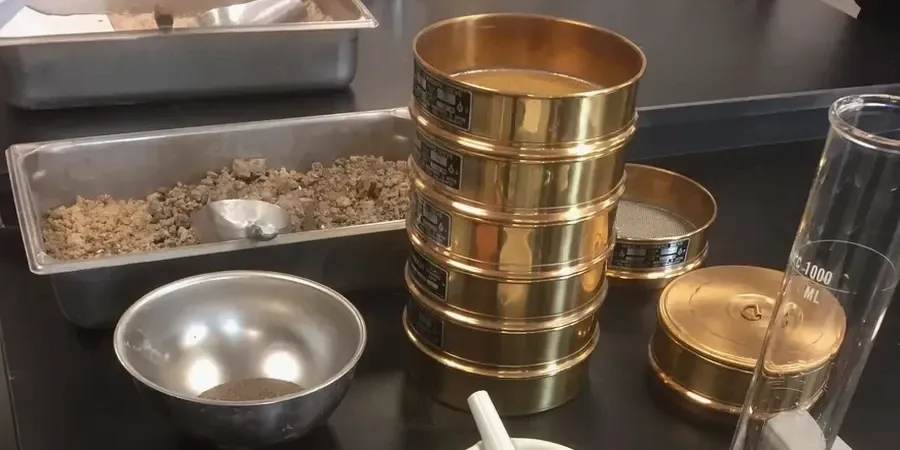
The contrast between a site near Buffalo Bayou Park and one out in Katy Prairie tells you everything about why in-situ testing matters. Downtown, the Beaumont Formation clays sit below a thin cap of fill, and the permeability often hovers around 10⁻⁷ to 10⁻⁸ cm/s—low enough that an open excavation might hold water like a bathtub. But drive west to the prairie, where the Lissie Formation sands inter-finger with clay lenses, and you'll find horizontal permeability two to three orders of magnitude higher, driven by the sandy matrix. A lab remolded sample never captures that anisotropy. The Lefranc test reads it directly in the field. When we combine the results with a grain size analysis in our lab, we can calibrate the Hazen correlation to Houston-specific formations and provide a defensible permeability model for the whole site. That's the difference between a dewatering system that cycles on and off efficiently and one that runs 24/7 and still doesn't pull down the water table.
Field Permeability Testing (Lefranc & Lugeon) in Houston
Technical reference — Houston

Local considerations

Houston's explosive growth since the ship channel was dredged in 1914 has pushed development into low-lying floodplains and former marshlands where the subsurface hydrogeology is unforgiving. The risk of a misinterpreted permeability profile shows up where it hurts most: a deep excavation near the Texas Medical Center that floods because the Beaumont clay was assumed impermeable but contained a continuous sand seam. A detention pond in Kingwood that never holds water because the perched layer drains laterally into a buried channel deposit. A grouting program in a fractured Willis Formation that takes three times the estimated material because the Lugeon values were guessed instead of measured. Field permeability testing eliminates these surprises. Our team maps the true hydraulic conductivity of each stratigraphic unit so that your dewatering system, cutoff wall, or foundation drain is engineered for the ground you have, not the ground you hoped for.

Need a geotechnical assessment?

Reply within 24h.

Email: contact@geotechnical-engineering1.org

Applicable standards

ASTM D6391-11 (Borehole Permeability by Lefranc Method), Houlsby (1976) Lugeon Test Procedure (5-cycle pressure test), FHWA-NHI-10-016 (Geotechnical Site Characterization)

Technical parameters

ParameterTypical value
Test methodASTM D6391-11 (Lefranc), Houlsby procedure (Lugeon)
Test depth range3 to 60 meters below ground surface
Packer type (Lugeon)Single or double pneumatic, wireline-deployed
Pressure steps (Lugeon)5-step cycle (0.5 to 1.0 MPa max per step)
Flow measurementDigital flowmeter, ±0.5% accuracy
Data outputk (cm/s), Lugeon units, P-Q curves, transmissivity
Applicable soil/rockBeaumont clay, Lissie sands, Willis Formation clay-shale
Groundwater conditionsPerched, artesian, or water table; Houston-specific analysis

Frequently asked questions

How much does a field permeability test cost in Houston?

For a single Lefranc or Lugeon test interval in the Houston area, the cost typically ranges from US$560 to US$1,030 per test point, depending on the borehole depth, the number of test intervals required, and whether the hole is already drilled and cased. A full-day testing program with multiple intervals and a signed report will fall within that per-point range when viewed as a package.

When do we need a Lugeon test instead of a Lefranc test?

The Lugeon test is the right choice when you are drilling into fractured, cemented, or rock-like materials—such as the clay-shales of the Willis Formation or the cemented sands found at depth in Houston. The packer system isolates a specific interval and pressurizes it, giving you a measure of rock mass permeability. The Lefranc test is designed for soil-like materials where the borehole wall is stable enough to test without a packer.

What's the turnaround time for test results?

The field data—flow rates, pressure steps, and water levels—is logged digitally on site. The engineer reviews the P-Q curves and calculates the Lugeon values or k coefficient the same day. The final signed report, including stratigraphic context and interpretation, is typically delivered within 24 to 48 hours of completing the field work.

Can you test below the water table in Houston's soft clays?

Yes, that's exactly where the Lefranc variable-head test excels. We lower the water level in the casing by bailing, then measure the rate of recovery as groundwater flows into the test section. In the soft, saturated Beaumont clays common across Houston, this falling-head procedure gives a direct measurement of in-situ hydraulic conductivity without the risk of hydraulic fracturing that can occur with injection tests.

Location and service area

We serve projects across Houston and its metropolitan area. More info.

View larger map