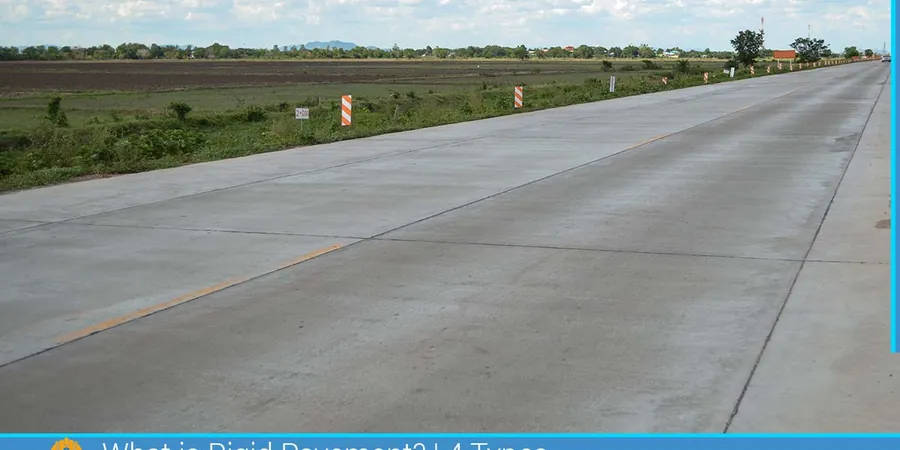
The first thing you notice on a Houston project is the concrete mixer’s slump cone—not the mixer itself, but how the crew adjusts the water-cement ratio in real time. Houston’s summer heat, often hitting 100°F with 90% humidity, accelerates the initial set of concrete so aggressively that a mix designed in a lab can lose workability before it even leaves the truck. In our team, we always spec a mid-range water reducer and sometimes a hydration stabilizer just to buy placement time. A rigid pavement here has to resist not only traffic loads but also the underlying Beaumont Formation clays, which swell when wet and shrink when dry. We correlate the subgrade CBR values from our field tests with the Portland Cement Association’s design tables, but we never skip a site-specific plate load test to verify the modulus of subgrade reaction before finalizing the slab thickness. Houston’s gumbo soils punish generic designs—we have learned that the hard way.
A rigid pavement in Houston lives or dies by its subgrade—if the clay beneath the slab moves, the concrete will follow.