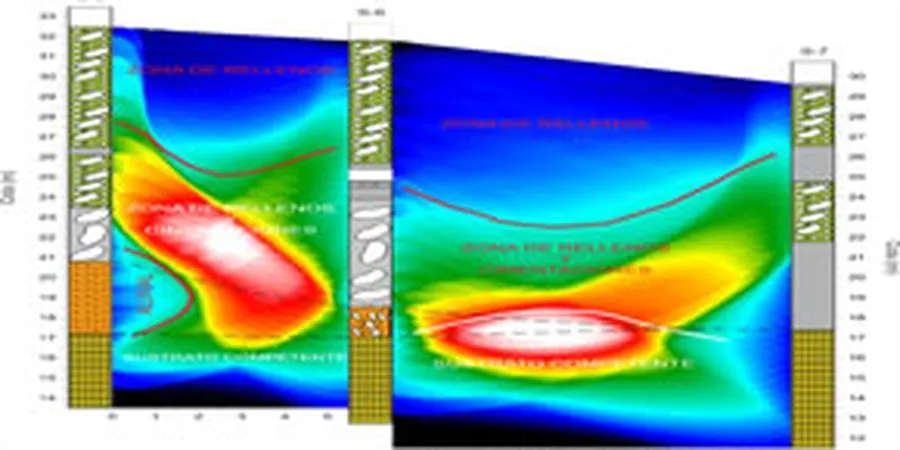
Seismic engineering in Houston encompasses a specialized suite of geotechnical and structural analyses aimed at evaluating and mitigating the effects of earthquake-induced ground motion on infrastructure. While Texas is not traditionally associated with high seismicity like California, the greater Houston area faces a unique combination of induced seismicity, deep soil deposits, and expansive urban development that demands rigorous seismic consideration. This category covers everything from regional seismic hazard assessments to site-specific response analyses, including critical services like seismic microzonation, which maps variations in ground shaking potential across a project area. For engineers, developers, and public agencies, integrating seismic resilience into design is no longer optional but a best practice driven by evolving building codes and the need to protect long-term investments in a growing metropolitan region.
Houston's geological setting presents distinct challenges for seismic design. The city rests on the Gulf Coastal Plain, characterized by thick sequences of unconsolidated clays, silts, and sands that can amplify seismic waves and extend the duration of shaking. These soft soil conditions, classified under the International Building Code (IBC) as Site Class D or E, significantly influence how earthquake energy reaches the surface. Additionally, the presence of active growth faults across the metro area introduces permanent ground deformation risks that must be evaluated alongside vibratory motion. Understanding this interplay between deep stratigraphy, faulting, and basin effects is essential for accurate seismic hazard characterization, making site-specific studies far more reliable than generic regional maps.
The applicable regulatory framework in the United States, and by extension Houston, is governed by the IBC as adopted and amended by the City of Houston, which references ASCE 7 for seismic design criteria. ASCE 7-22 provides the latest national standards for determining design ground motions based on site class and risk category. Crucially, the code requires consideration of maximum considered earthquake (MCE) shaking and design earthquake ground motions for structures in Seismic Design Categories B through D, which increasingly apply to essential facilities and tall buildings in the region. Local amendments and the permitting process through the Houston Permitting Center enforce compliance with these standards, while geotechnical reports must clearly present seismic parameters like peak ground acceleration (PGA) and spectral acceleration values at 0.2 and 1.0-second periods. Services such as seismic microzonation help bridge the gap between code-level assumptions and site-specific realities.
A wide range of project types in Houston now require or strongly benefit from seismic engineering input. High-rise commercial and residential towers, critical infrastructure like hospitals and emergency response centers, long-span bridges, and industrial facilities handling hazardous materials all fall under higher risk categories with more stringent seismic provisions. Even mid-rise structures on soft soils can experience resonance effects that demand dynamic analysis. Linear and non-linear site response analyses, liquefaction assessments, and seismic slope stability evaluations are common deliverables. For large-scale developments or linear infrastructure projects, seismic microzonation provides the granular, spatially distributed data needed to optimize structural design and land-use planning, reducing uncertainty and guiding cost-effective mitigation measures across the entire site.
Seismic site classification assigns a single Site Class (A-F) to a borehole location based on the average shear wave velocity in the top 30 meters, per ASCE 7. Microzonation goes further by mapping how ground shaking varies spatially across a larger area, considering deeper geology, basin effects, and soil layering. For Houston’s complex subsurface, microzonation reveals sharp transitions in amplification potential that a single site class cannot capture, guiding more precise structural design and land-use decisions.
Induced seismicity, often linked to subsurface fluid injection or extraction, can alter the local earthquake hazard by increasing the frequency of small-to-moderate events. While current IBC and ASCE 7 provisions primarily address natural tectonic hazards, engineers must evaluate whether induced events warrant a higher design category or site-specific probabilistic analysis. In Houston, this evolving risk underscores the need for continuous monitoring and adaptive geotechnical studies that incorporate both natural and anthropogenic sources.
A site-specific analysis is typically required for structures on soft soils (Site Class D or E) with high occupancy or importance, or when near-fault effects, basin resonance, or deep soil amplification are suspected. The IBC mandates it for certain Seismic Design Categories and tall buildings. In Houston, the thick, unconsolidated sediments often produce spectra that deviate from generic code curves, making dynamic analysis essential to avoid underestimating long-period shaking or overestimating short-period demand.
Growth faults are slowly moving, aseismic features common in the Houston area, but they can still influence seismic hazard by creating zones of differential settlement and potentially interacting with earthquake-induced ground deformation. A comprehensive seismic study evaluates both vibratory ground motion and the risk of fault rupture or reactivation during shaking. This dual assessment ensures that structural foundations and underground utilities are designed to tolerate both transient and permanent displacements.