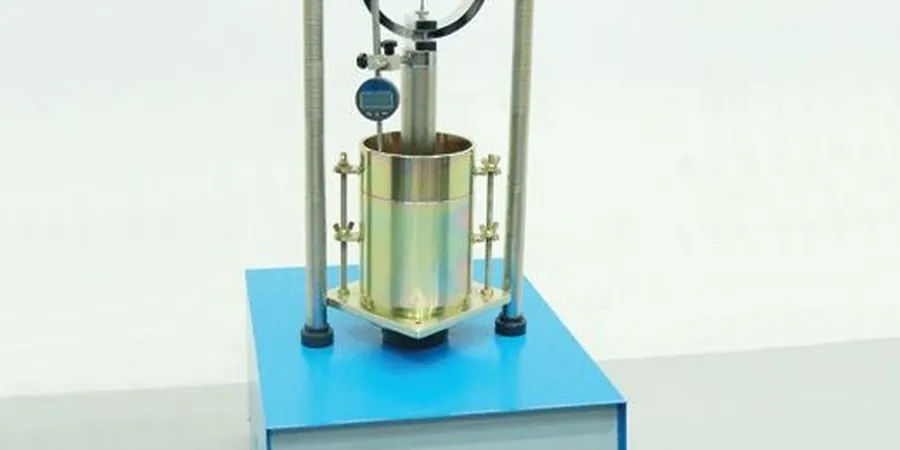
Houston's geology presents a genuine challenge for pavement engineers. The city sits atop the Beaumont Formation, a vast deposit of Pleistocene-age clays that shrink and swell with every seasonal rain cycle. When you factor in the region's subtropical humidity and the notorious 'gumbo' clay that turns to soup after a downpour, subgrade strength becomes anything but predictable. A laboratory CBR test strips away that uncertainty. By compacting soil samples at controlled moisture and density and measuring their resistance to a standardized piston, we determine the California Bearing Ratio that dictates layer thicknesses for both flexible pavement and rigid pavement structures. This isn't a generic index; it's a design input calibrated to Houston's moisture-sensitive soils. Our laboratory follows ASTM D1883 and AASHTO T 193 procedures, preparing specimens at multiple compaction points to map how strength degrades when the clay absorbs water from a broken curb or a leaking irrigation line. The result is a pavement section that holds up to the 50-inch annual rainfall and the logistics traffic pounding the I-10 and Beltway 8 corridors.
A Houston subgrade that measures CBR 18 at optimum moisture can drop below CBR 3 after a four-day soak—that single data point changes the pavement section from 6 inches of asphalt to 12.