GEOTECHNICAL ENGINEERING
HOUSTON
HomeSeismicSeismic microzonation

Seismic Microzonation Studies in Houston, Texas

Evidence-based design. Reliable delivery.

LEARN MORE

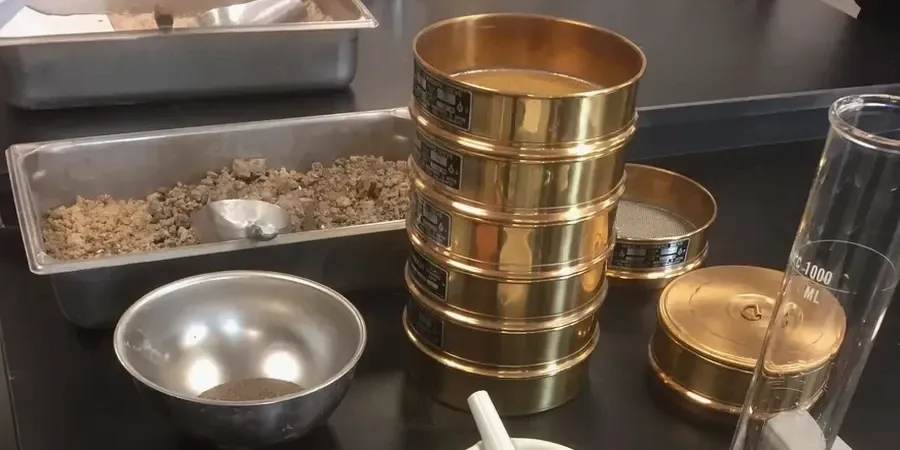
Houston sits roughly 50 miles from the Gulf of Mexico on a thick package of Quaternary sediments that can exceed 3,000 feet in depth before reaching competent rock. With a metropolitan population approaching 7.3 million and critical infrastructure concentrated along the Buffalo Bayou and the Ship Channel, the city's exposure to long-period ground motion from distant seismic sources—particularly the New Madrid Seismic Zone and induced seismicity in the Fort Worth Basin—demands a refined understanding of local site effects. Generic code-based site classification alone cannot capture the impedance contrasts within the Beaumont and Lissie formations that control amplification across the 610 Loop and the Energy Corridor. Our technical team applies MASW and downhole seismic testing to measure shear-wave velocity profiles, feeding those data into one-dimensional equivalent-linear and nonlinear site response analyses that produce the spectral ordinates engineers actually need for foundation design. The result is a block-by-block seismic microzonation that integrates geostatistical interpolation of Vs30 with basin-edge effects and deep shear-wave velocity reversals characteristic of the upper Texas coast, providing a defensible basis for ASCE 7 Chapter 20 site classification across the city's varied depositional environments.

Site-specific response analysis in Houston frequently reveals spectral accelerations at periods of 0.5 to 1.5 seconds that exceed code-based values by 25 percent or more—a direct consequence of deep soft clay amplification.
Our service areas

Methodology and scope

Houston's explosive post-war growth transformed coastal prairie and scattered pine-oak woodlands into a sprawling network of subdivisions, bayou crossings, and flood-control reservoirs—much of it constructed before modern seismic provisions entered the International Building Code. The city's expansion onto Pleistocene-age Beaumont clays and Holocene fluvial deposits created a patchwork of site conditions where the fundamental period of the soil column can shift dramatically within a single city block, especially near the transition zones mapped by the USGS as part of the National Seismic Hazard Model. A microzonation study in this environment begins with a dense grid of geophysical soundings calibrated against geotechnical borings that log the plasticity characteristics and undrained shear strength of the upper 100 feet—parameters that govern cyclic degradation and strain-dependent modulus reduction. The work integrates the Atterberg limits and laboratory index testing carried out on undisturbed Shelby tube samples to constrain the modulus reduction and damping curves assigned to each soil layer in the response model. For critical facilities in the Texas Medical Center or along the Port of Houston, the analysis extends to three-dimensional basin models that capture lateral wave propagation and surface-wave generation at the edges of buried paleo-channels, producing design acceleration response spectra that differ markedly from the smoothed code spectra in ASCE 7-22.
Seismic Microzonation Studies in Houston, Texas
Technical reference — Houston

Local considerations

The Beaumont Formation clays that underlie much of central and southeast Houston exhibit high plasticity indices—commonly above 30 percent—and low shear-wave velocities that persist to considerable depth, creating conditions where long-period energy from distant earthquakes can amplify significantly before reaching the surface. Groundwater in the Chicot and Evangeline aquifers typically sits within 10 to 20 feet of grade across the city, maintaining near-saturated conditions in the upper soil column that suppress effective stress and reduce small-strain stiffness. This combination of deep, soft, saturated clay and a shallow water table raises the hazard profile for mid-rise and tall buildings whose fundamental periods align with the site period, a resonance scenario that the uniform-hazard approach in ASCE 7 may not fully capture without microzonation. Liquefaction susceptibility is generally low in the overconsolidated Pleistocene clays, but loose sand lenses within the Holocene alluvium along Buffalo Bayou and Brays Bayou can trigger localized settlement and lateral spreading under a 2,500-year return period event, requiring targeted investigation in the East End and near the Turning Basin.

Need a geotechnical assessment?

Reply within 24h.

Email: contact@geotechnical-engineering1.org

Applicable standards

ASCE/SEI 7-22 Minimum Design Loads and Associated Criteria for Buildings and Other Structures (Chapter 20: Site Classification Procedure for Seismic Design), ASTM D7400-19 Standard Test Methods for Downhole Seismic Testing, NEHRP Recommended Provisions for Seismic Regulations for New Buildings and Other Structures (Vs30-based site classification)

Technical parameters

ParameterTypical value
Vs30 Mapping Interval250 m grid (NEHRP Classes C through E)
Depth to Vs = 1,000 m/s (Rock)Typically >900 m across Harris County
Predominant Site Period (T0)0.4 s to 1.8 s depending on clay thickness
Analysis Method1D EQL (SHAKE2000) and NL (DEEPSOIL 7.0)
Spectral Period Range0.01 s to 5.0 s (5% damping)
Input Motion SelectionUniform Hazard Spectrum (UHS) matched suites per ASCE 7-22
Reporting OutputSpectral ordinate maps, amplification factor contours, NEHRP site class boundaries

Frequently asked questions

What is the typical cost range for a seismic microzonation study in Houston?

Microzonation studies in the Houston area generally range from US$4,760 for a targeted site response analysis on a single lot to approximately US$18,440 for a comprehensive grid-based mapping campaign covering several acres with multiple geophysical soundings and laboratory dynamic tests. The final cost depends on the required grid density, depth of investigation, and the number of input ground motions selected for the analysis.

How does Houston's deep soil profile affect seismic hazard compared to other Texas cities?

Houston's sediment column extends to depths where the shear-wave velocity reaches 1,000 meters per second at over 900 meters below grade—far deeper than cities on the Edwards Plateau or the Llano Uplift. This means long-period energy arriving from distant sources undergoes considerable amplification within the soft clays between 10 and 100 meters depth, producing higher spectral accelerations at periods of 0.5 to 1.5 seconds than a simple rock-ground-motion attenuation would predict.

What geophysical methods are used to measure Vs30 for microzonation mapping?

The primary method for Vs30 determination in the Houston area is the Multichannel Analysis of Surface Waves (MASW), which uses an array of low-frequency geophones and an active or passive source to extract the fundamental-mode Rayleigh wave dispersion curve. MASW results are calibrated against downhole seismic tests at select boring locations, and where deep velocity reversals are suspected—common in the Beaumont-Lissie contact—passive-source microtremor arrays are deployed to resolve the shear-wave velocity profile to depths exceeding 100 meters.

Location and service area

We serve projects across Houston and its metropolitan area.

View larger map