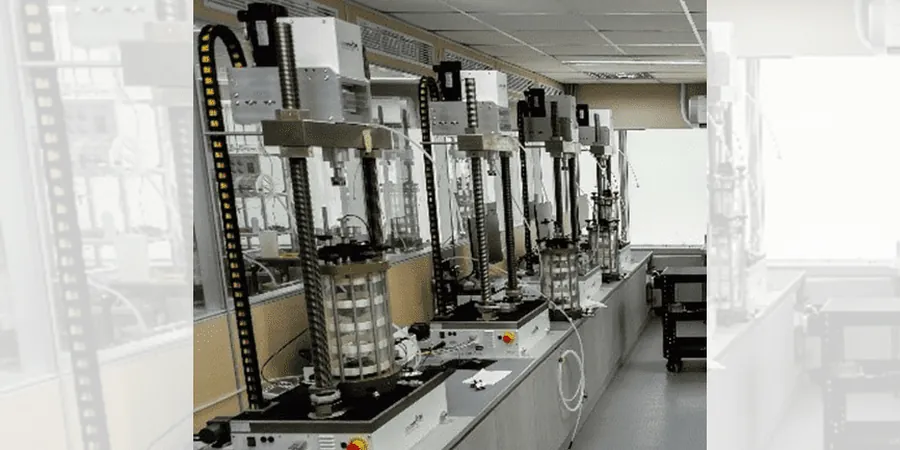
In the geotechnical engineering landscape of Houston, the Laboratory category encompasses a comprehensive suite of soil and materials testing services that transform raw field samples into the engineering parameters essential for safe, cost-effective design. Houston's unparalleled expansion—spanning from the densifying Inner Loop to the sprawling Energy Corridor and master-planned communities in Katy and The Woodlands—demands rigorous laboratory characterization of subsurface materials. Without precise lab data, engineers cannot reliably predict foundation settlement, slope stability, or pavement performance, making the laboratory an indispensable link between site investigation and structural integrity.
Houston's geology presents a notoriously challenging profile dominated by the Beaumont Formation and overlying Pleistocene-age clays, which are characterized by high plasticity and significant shrink-swell potential. These expansive soils, often classified as CH or CL under the Unified Soil Classification System, can exert uplift pressures exceeding 5,000 psf on slabs and pavements during seasonal moisture fluctuations. Laboratory testing becomes critical to quantify these behaviors: an Atterberg limits analysis determines the liquid limit and plasticity index that directly correlate to a soil's volume change potential, while a triaxial test provides the drained and undrained shear strength parameters needed for deep foundation design in the city's ubiquitous fat clays and underlying interbedded sands.
The regulatory framework governing geotechnical laboratory work in the Houston metro is shaped primarily by the City of Houston Building Code, which references the International Building Code (IBC) with local amendments, alongside stringent Texas Department of Transportation (TxDOT) specifications for infrastructure projects. ASTM International standards form the backbone of testing procedures: ASTM D422 guides the grain size analysis (sieve + hydrometer) that establishes the full particle-size distribution curve, ASTM D4318 governs Atterberg limits, and ASTM D2850 and D4767 cover triaxial compression testing. For projects within Harris County floodplains, laboratory permeability tests and consolidation data are often required to satisfy detention and drainage ordinances, ensuring that development does not exacerbate the region's flood vulnerability.
The types of projects that rely on this laboratory category are as diverse as Houston's built environment. High-rise towers in Uptown demand advanced triaxial testing to model deep excavation behavior and mat foundation performance under complex loading. Residential subdivisions on the expansive clay prairies of Cypress and Pearland require extensive Atterberg limits and one-dimensional swell tests to design post-tensioned slabs and select fill treatments. Transportation megaprojects, such as the ongoing I-45 expansion and Grand Parkway segments, generate thousands of grain size analyses and compaction tests to verify structural fill and subgrade modulus. Energy sector terminals along the Houston Ship Channel depend on specialized laboratory programs to assess chemical compatibility and long-term settlement of tank foundations on the soft, normally consolidated clays of the Gulf Coast.
The most critical tests for Houston's expansive Beaumont Formation clays include Atterberg limits to determine plasticity index and shrink-swell classification, one-dimensional swell-consolidation tests to quantify volume change potential under varying moisture conditions, and unconfined compressive strength or triaxial tests to establish undrained shear strength. Grain size analysis with hydrometer is also essential to verify the full clay fraction, as soils with more than 30 percent passing the No. 200 sieve typically exhibit problematic expansion behavior.
ASTM standards are the universally adopted reference for geotechnical laboratory testing in Houston, mandated by local building codes, TxDOT specifications, and project-specific geotechnical reports. Key standards include ASTM D422 for particle-size analysis, ASTM D4318 for Atterberg limits, ASTM D2850 for unconsolidated-undrained triaxial tests, and ASTM D2435 for consolidation testing. Accredited laboratories must follow these methods precisely to produce legally defensible results, and deviations require explicit approval from the project geotechnical engineer of record.
Turnaround times vary by test complexity and laboratory backlog, but a standard commercial project program in Houston typically requires 7 to 14 business days for routine classification tests such as grain size analysis and Atterberg limits. Consolidated-undrained triaxial tests with pore pressure measurement take longer, often 2 to 4 weeks due to required saturation and consolidation stages. Rush services are commonly available for time-sensitive projects, though they depend on current workload and specimen preparation requirements.
Laboratory-derived parameters directly dictate foundation type and depth in Houston. High plasticity indices from Atterberg limits often trigger the use of post-tensioned slabs or deep foundations instead of conventional stiffened slabs. Effective stress shear strength parameters from triaxial tests are input into bearing capacity and settlement models for drilled shafts and driven piles. Consolidation test data determine the magnitude and rate of settlement under structural loads, which is critical for projects on the compressible clays prevalent east of downtown and near the Ship Channel.