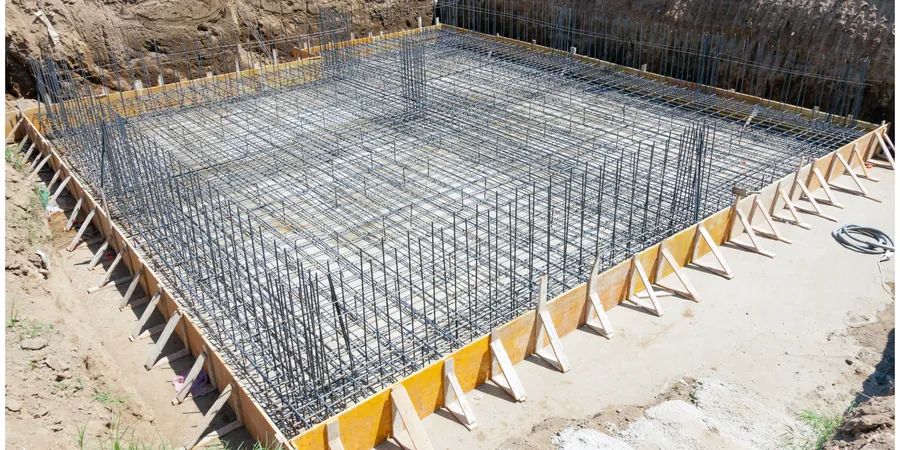
Designing a raft foundation in Houston means confronting the Beaumont Formation head-on. This Pleistocene-age clay dominates the local stratigraphy, and its high plasticity index (often exceeding 25) drives every structural decision we make. Under ASCE 7-22 and the IBC, any stiffened raft on expansive soil must account for edge-lift and center-lift deformation modes—these aren't academic footnotes, they're the difference between a slab that stays level and one that cracks within two seasonal cycles. Houston's flat topography and slow-draining clay basins create perched water tables that fluctuate wildly between summer droughts and tropical downpours. A proper geotechnical investigation for a raft foundation here doesn't just log moisture content; it quantifies the unsaturated swell pressure and the depth of the active zone, which in Harris County can extend to 12 feet below grade. Before finalizing the structural design, we typically cross-check the subgrade modulus with in-situ CPT testing to validate the laboratory-derived consolidation curves.
A raft foundation on Beaumont clay isn't a structural slab—it's a soil-structure interaction system governed by heave prediction.