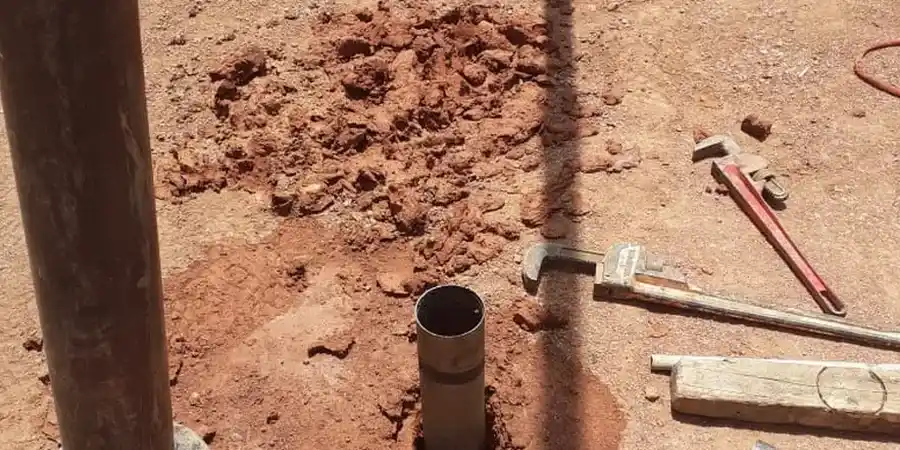
In-situ testing represents a cornerstone of geotechnical site characterization in Houston, encompassing a suite of field-based methods designed to evaluate soil and rock properties without removing samples from their natural environment. This category covers essential procedures such as density assessment, permeability measurement, strength evaluation, and deformation analysis—all performed directly on the ground to capture real-world conditions that laboratory tests often miss. In a city built on expansive clays, loose alluvial deposits, and a shallow groundwater table, the importance of these tests cannot be overstated. They provide the empirical data needed to design foundations, retaining structures, pavements, and earthworks that must withstand Houston's unique subsurface challenges, including seasonal shrink-swell cycles and occasional flooding.
Houston's geology is dominated by Quaternary-age sediments deposited by ancient river systems, primarily the Brazos and Trinity rivers. The near-surface stratigraphy typically consists of alternating layers of fat clays, lean clays, silts, and sands belonging to the Beaumont and Lissie formations. These soils are notorious for their high plasticity and moisture sensitivity, with swell potentials that can exert significant pressures on foundations. The Gulf Coast setting also means groundwater is often encountered within 10 to 15 feet of grade, influencing effective stress conditions and complicating excavations. In-situ tests such as the field density test (sand cone method) allow engineers to verify compaction levels in structural fill and subgrade, ensuring that the placed materials achieve the required relative density despite the underlying natural soils' variability.
Regulatory compliance in Houston and throughout Texas is governed by a combination of local amendments to the International Building Code, the City of Houston Infrastructure Design Manual, and standard specifications from the Texas Department of Transportation (TxDOT). These documents mandate minimum in-situ testing frequencies and acceptance criteria for earthwork, deep foundations, and pavement subgrades. For example, TxDOT Item 132 requires nuclear or sand cone density testing at specified intervals for embankment construction, while ASTM D1556 and D6938 provide the procedural frameworks adopted by reference. Permeability testing, including Lefranc and Lugeon methods, is frequently required for stormwater infiltration systems, retention ponds, and environmental site assessments, with acceptance rates tied to local drainage criteria and TCEQ regulations.
The range of projects that demand comprehensive in-situ testing is broad and reflects Houston's dynamic infrastructure landscape. Commercial building pads in the Energy Corridor rely on field density verification to prevent differential settlement beneath slab-on-grade foundations. Transportation projects, including the ongoing expansion of the Grand Parkway and METRO light rail extensions, require continuous compaction control and bearing capacity evaluation through plate load tests or dynamic cone penetrometer profiling. Residential developments in suburbs like Katy and The Woodlands often need permeability assessments to design proper drainage in neighborhoods prone to high water tables. Even forensic investigations following foundation distress—common in areas with mature live oaks that desiccate soils—depend on in-situ moisture and density profiling to diagnose root causes and guide remedial underpinning designs.
In-situ testing evaluates soil properties in their natural state without disturbing the sample, preserving moisture content, stress conditions, and fabric. Laboratory tests require extracted samples that may undergo disturbance during sampling, transport, or preparation. In-situ methods like the cone penetration test or pressuremeter provide continuous profiles and immediate results, while lab tests allow controlled conditions and precise measurement of parameters like shear strength or consolidation. Both approaches are complementary, with in-situ data often used to calibrate lab results and vice versa.
For Houston's Beaumont formation clays, standard penetration tests (SPT) and cone penetration tests (CPT) are routinely used to assess stratigraphy and estimate bearing capacity. Pressuremeter tests provide deformation moduli for settlement analysis, while field density tests verify engineered fill compaction. Given the shrink-swell potential, in-situ moisture profiling is critical to identify active zones. Permeability tests like the Lefranc method are often specified when designing under-slab drainage systems to mitigate moisture fluctuations beneath foundations.
Houston's high water table, typically within 10 to 15 feet of the surface, significantly influences permeability test selection and interpretation. The Lefranc test is preferred for saturated soils above the water table where a constant or falling head can be applied, while Lugeon tests are used in fractured rock below the water table. Proper test section isolation is critical to avoid leakage and ensure accurate hydraulic conductivity values. Results must be corrected for hydrostatic pressure and well efficiency to provide reliable inputs for dewatering, infiltration, or containment designs.
Acceptance criteria typically require compacted fill to achieve at least 95% of the maximum dry density determined by ASTM D698 (Standard Proctor) for building pads, with moisture content within ±2% of optimum. For pavement subgrades, TxDOT specifications often mandate 98% to 100% compaction for the top 12 inches. Field density tests using the sand cone method or nuclear gauge must be performed at frequencies specified in the project specifications, commonly one test per 2,500 square feet per lift, with failing areas reworked and retested until compliance is achieved.