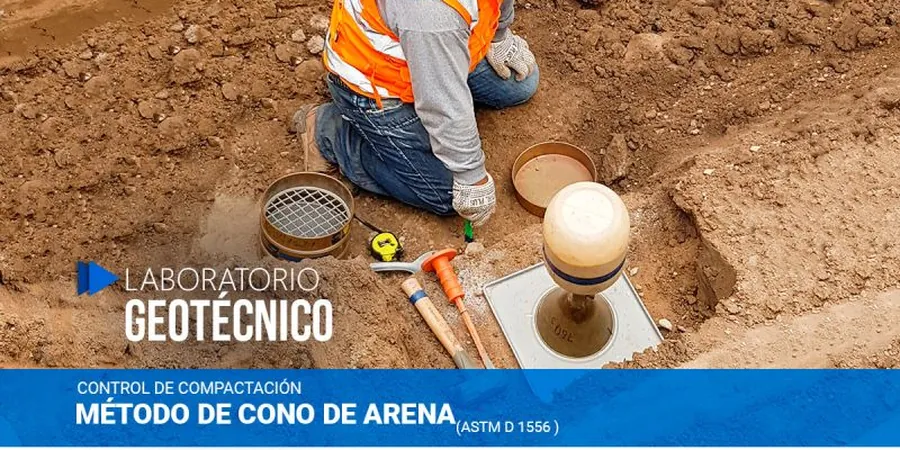
Houston’s geology isn’t forgiving. The city sits on the Beaumont Formation – thick Pleistocene clays that swell when wet and shrink to a brick-like hardness during our long, dry summers. Anyone who’s managed a site near Buffalo Bayou or out toward Katy knows the drill: you move dirt, you compact it, and then the Houston humidity creeps in overnight and changes everything. That’s where field density testing with the sand cone method earns its keep. Based on ASTM D1556, it gives you a direct measurement of in-place density – no nuclear gauges, no calibration drift, just a straightforward volume-replacement check that tells you whether the lift you just rolled actually meets spec. For Houston earthwork contractors building on fat clays with plasticity indices north of 30, the sand cone test is often the referee that settles the argument between the grader and the geotech. When we run a sand cone density test on a building pad in the Energy Corridor or a trench backfill under I-10, we’re looking at percent compaction relative to a lab Proctor curve – and in these soils, missing by two percent can mean the difference between a slab that stays flat and one that heaves after the first summer rain.
In Houston’s fat clays, a two-percent compaction shortfall can be the difference between a slab that stays flat and one that moves with every summer rain.