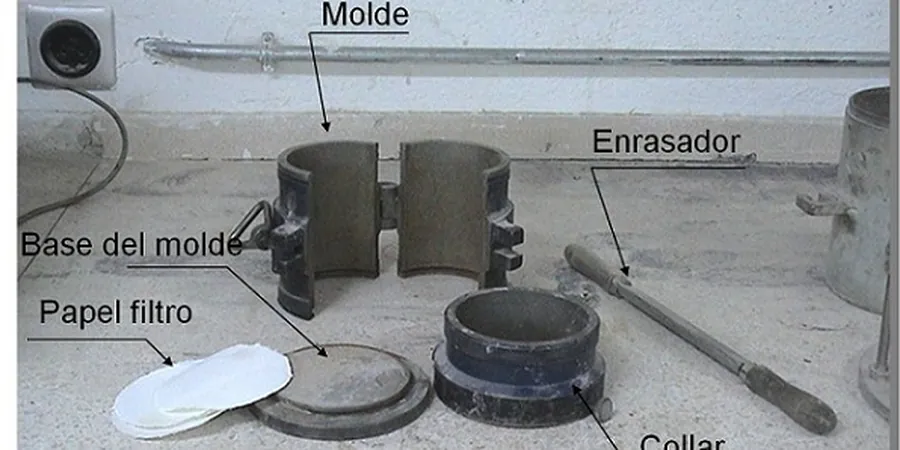
A common mistake on Houston construction sites is assuming the black gumbo clay native to the Gulf Coast Prairie will respond to compaction the same way as a clean sand from the Willis Formation. When a contractor runs the wrong Proctor effort on fat clay with liquid limits above 50, the resulting density target can be unachievable in the field, or worse, it masks a moisture sensitivity that triggers differential heave later. Our team steps in before the pads are cut: we run the Atterberg limits first to classify the material, then select Standard or Modified Proctor per ASTM D698 or D1557 to build a moisture-density curve that actually fits the borrow source. In a metro area spanning four counties where fill quality swings from Beaumont clay to Pleistocene terrace sand, getting the compaction specification right is not just a QA checkbox; it determines whether the slab stays flat through the next drought cycle.
Selecting the wrong Proctor effort for Houston\'s fat clays can set a density target that is either unattainable or masks the moisture sensitivity that drives slab heave.