GEOTECHNICAL ENGINEERING
HOUSTON
HomeGround improvementStone column design

Stone Column Design in Houston: Ground Improvement for Weak Gulf Coast Soils

Evidence-based design. Reliable delivery.

LEARN MORE

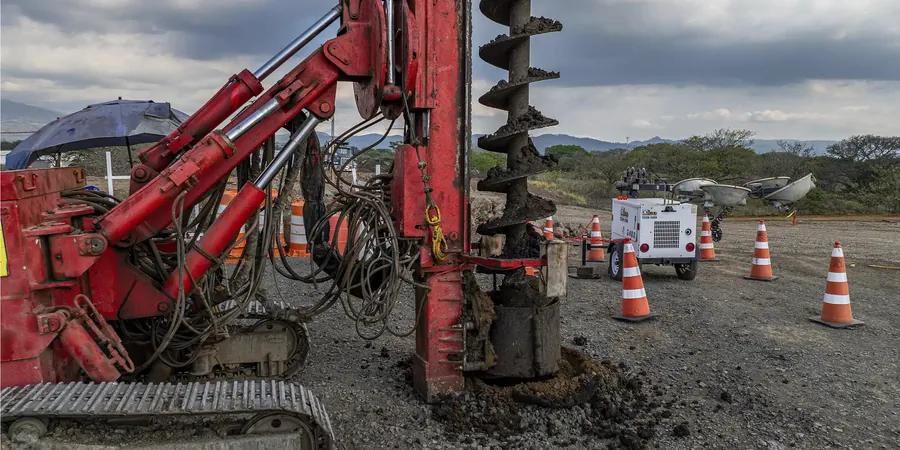
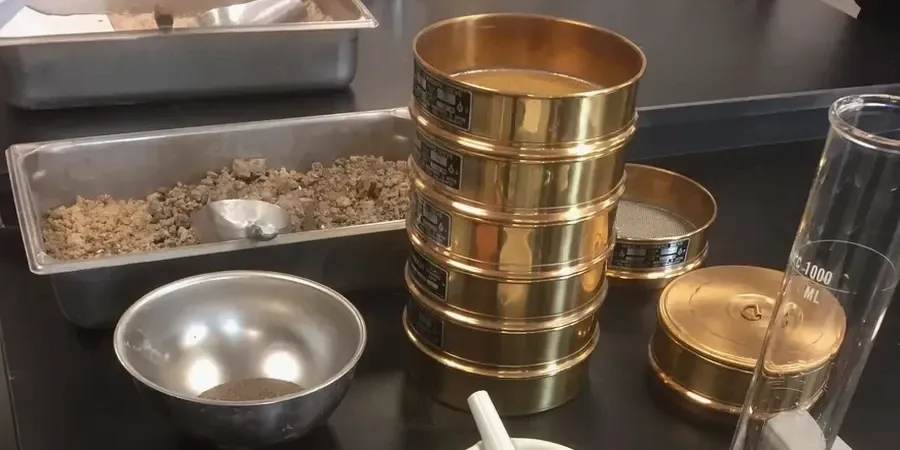
The design of stone columns in Houston must address the Beaumont Formation clays and loose Pleistocene sands that underlie much of Harris County. IBC Section 1803 requires site-specific geotechnical data, and ASTM D1586 standard penetration tests consistently show N-values below 8 in the upper 20 feet across the metro area. These soft compressible soils demand rigorous ground improvement before structural loads can be transferred safely. Our laboratory processes undisturbed Shelby tube samples to measure undrained shear strength, which feeds directly into the unit cell model for the stone column design. With a groundwater table often just 6 feet below grade, the installation method matters as much as the spacing calculation, and we verify both during field trials before production begins.

A properly instrumented modulus test on a stone column tells you more about the composite ground stiffness than a dozen SPT borings alone.
Our service areas

Methodology and scope

Comparing a site near Buffalo Bayou with one in the Energy Corridor reveals how variable Houston’s subsurface can be. Along the bayou, organic silts and fat clays with plasticity indices above 35 require stone columns spaced as tight as 5 feet on center to achieve a factor of safety of 2.0 against bearing failure. Out west near Barker Reservoir, the soils shift to stiff overconsolidated clays where a 7-foot triangular grid often suffices. In both cases, the column diameter, typically 30 to 36 inches, gets confirmed through modulus load tests that we instrument with telltales at three depths. Before finalizing the layout, we often correlate SPT blow counts from a standard penetration test program with the Priebe method, and for sites where settlement tolerance is below half an inch, we pair the columns with a load transfer platform designed per the Hughes and Withers methodology. The aggregate gradation, usually a clean 1.5-inch minus stone, follows ASTM D448 and gets tested for degradation resistance before placement.
Stone Column Design in Houston: Ground Improvement for Weak Gulf Coast Soils
Technical reference — Houston

Local considerations

Houston sits on Quaternary-age deposits where the upper 30 feet often contain interlaminated fat clays and silty sands, a stratigraphy that the USGS classifies as site class D or E depending on the bayou proximity. When a stone column program skips pre-production cone penetration testing, the risk of encountering an undetected sand lens is high; the vibroflot can lose confinement and the column diameter balloons unpredictably, wasting aggregate and failing to densify the surrounding matrix. In one case near Greens Bayou, a contractor omitted the load test and the finished floor settled 1.8 inches within six months, requiring costly re-leveling. The combined effects of Houston’s seasonal shrink-swell cycles and a shallow water table demand that we verify column integrity through at least two modulus tests per critical zone, always referencing the acceptance criteria in FHWA-SA-92-013. Our team logs the amperage and withdrawal rate on every column, because that record becomes the first line of defense when a structural engineer questions the improvement.

Need a geotechnical assessment?

Reply within 24h.

Email: contact@geotechnical-engineering1.org

Explanatory video

Applicable standards

ASTM D1586-18: Standard Test Method for Standard Penetration Test, IBC 2021 Section 1803: Geotechnical Investigations, FHWA-NHI-16-027: Ground Improvement Methods, ASTM D448-12: Standard Classification for Sizes of Aggregate, ASCE 7-22 Section 20: Site Classification Procedure

Technical parameters

ParameterTypical value
Column diameter (typical)30 to 36 inches
Area replacement ratio10% to 35%
Target SPT N-value (post-treatment)12 to 18 blows/foot
Aggregate size (ASTM D448)No. 57 or No. 67 stone
Modulus load test settlementLess than 0.5 inches at 1.5x design load
Depth range15 to 55 feet
Factor of safety (bearing)2.0 to 3.0
Installation methodWet top-feed vibro-replacement

Frequently asked questions

What soil types in Houston benefit most from stone columns?

The soft to medium Beaumont clays and loose silty sands found across Houston respond well to vibro-replacement. Soils with an undrained shear strength between 15 and 50 kPa and SPT N-values below 10 are the ideal candidates. Organic silts near the bayous can also be treated, though the area replacement ratio often needs to exceed 25% to control long-term settlement.

How long does a stone column design take from investigation to final plan?

A typical Houston project requires two to three weeks. The first week covers the field investigation and sample recovery. The second week runs the laboratory testing and Priebe method calculations. The third week finalizes the column layout, aggregate specification, and load test protocol. Larger sites with multiple structure footprints may extend the design phase to four weeks.

Do stone columns reduce liquefaction risk in Houston?

Yes, stone columns act as vertical drains and densify the surrounding soil, reducing excess pore pressure buildup during seismic loading. While Houston is not in a high-seismicity zone, the USGS still maps a peak ground acceleration of 0.05 to 0.10g for the area. Stone columns designed with a drainage function can mitigate the liquefaction potential in loose saturated sands that occasionally appear in the upper 25 feet.

What is the typical cost range for stone column design in Houston?

The design package, including field investigation, laboratory testing, analytical modeling, and the load test protocol, typically ranges from US$1,470 to US$5,870. The final cost depends on the number of column locations, the depth of treatment, and the number of modulus load tests required for the site.

How do you verify that the installed stone columns meet the design intent?

Verification follows a three-step protocol. First, we run SPT borings or CPT soundings between columns and compare the post-treatment blow counts or tip resistance to the design target. Second, we execute modulus load tests on at least two production columns per critical zone, measuring deflection under 150% of the design load. Third, we review the installation logs for each column, checking the amperage record and aggregate consumption against the expected profile for the soil type encountered.

Location and service area

We serve projects across Houston and its metropolitan area.

View larger map