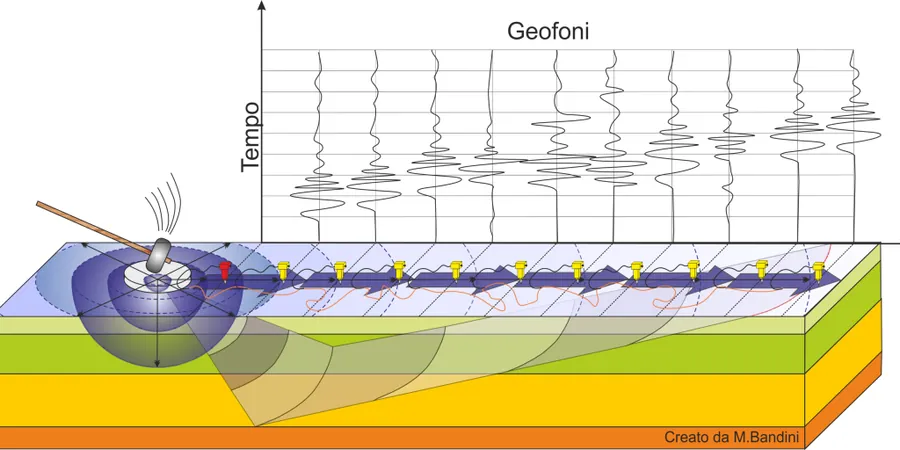
Most folks outside the field don't realize that Houston sits on a massive wedge of sedimentary deposits that can stretch over 10,000 feet thick in some areas. We routinely see sites where the upper 100 feet alone contains a layered sequence of stiff Beaumont clays, loose Pleistocene sands, and occasional organic silts from old bayou channels. Getting the average shear wave velocity in that top 30 meters isn't just a box to check on a permit application. It directly determines whether ASCE 7 classifies the site as D or E, which swings the seismic design forces by a significant margin. When the subsurface gets tricky, we often back up the surface wave data with an in-situ permeability test if groundwater control becomes part of the foundation design, or a seismic refraction line where we suspect a sharp velocity inversion at depth.
A one-class shift in ASCE 7 site classification can alter the base shear demand by 30% or more in Houston.