GEOTECHNICAL ENGINEERING
HOUSTON
HomeGeophysicsSeismic tomography (refraction/reflection)

Seismic Tomography: Refraction and Reflection Surveys in Houston

Evidence-based design. Reliable delivery.

LEARN MORE

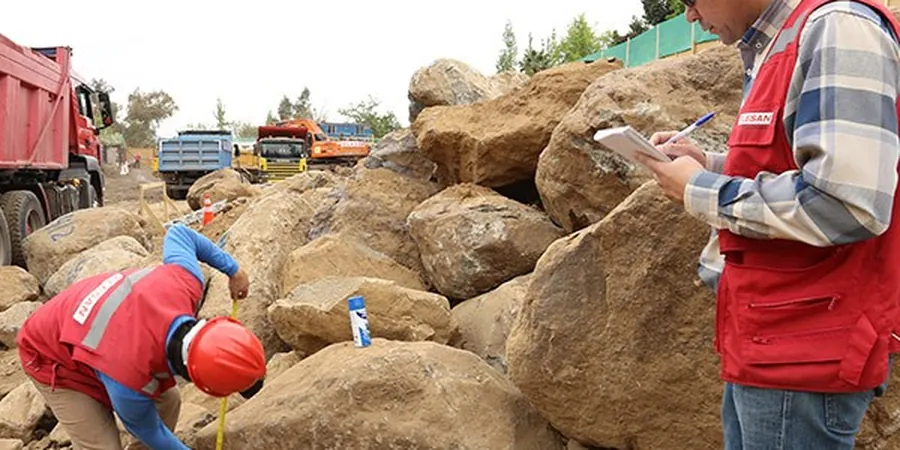
A geophone spread cable rolls out across a vacant tract near Buffalo Bayou: 24-channel arrays with 4.5 Hz vertical-component receivers, connected to a 24-bit seismograph that records first arrivals and reflections at sub-millisecond sampling intervals. In Houston, seismic tomography tackles a specific problem—the thick, unconsolidated Beaumont Formation clays and Pleistocene terrace deposits that blanket the metropolitan area from Katy to Baytown. These sediments, often exceeding 600 meters in depth before reaching competent bedrock, mask buried faults, paleochannels, and abrupt facies changes that affect foundation design. The refraction method maps the compressional-wave velocity (Vp) of successive layers by analyzing critically refracted head waves, while the reflection technique images deeper impedance contrasts tied to the Fleming Formation and underlying Vicksburg Group. Together, they produce a continuous velocity model of the subsurface that no drilling program alone can provide across the spatial scales required for large Houston developments. When a high-resolution stratigraphic profile is needed before committing to a deep boring plan, the team often runs a preliminary MASW survey to constrain shear-wave velocities in the upper 30 meters, then extends the imaging depth with refraction tomography.

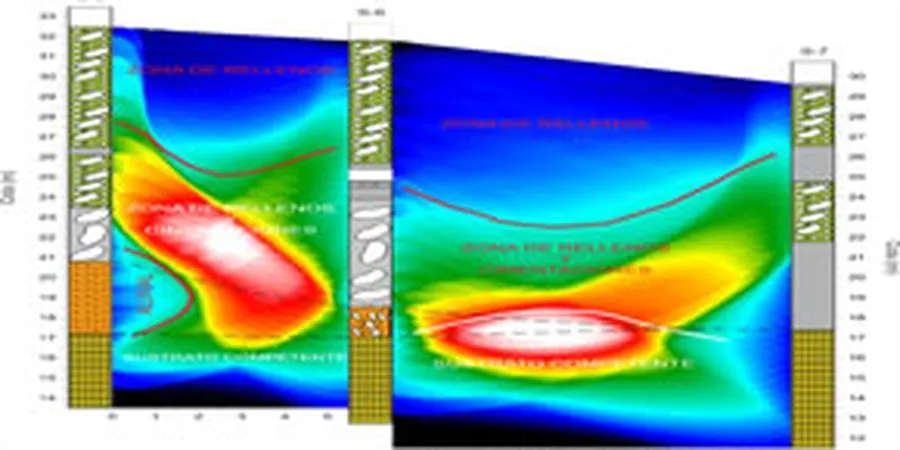
A well-constrained seismic velocity model turns a single boring log into a calibrated cross-section spanning hundreds of meters—essential in Houston's faulted, laterally variable geology.
Our service areas

Methodology and scope

Houston sits at roughly 15 meters above mean sea level, yet its subsurface tells a far more complex story: the city overlies more than 300 mapped faults—many of them growth faults—that deform Quaternary sediments through differential subsidence and natural compaction. Seismic tomography in this setting must resolve velocity contrasts as subtle as 200 m/s across fault planes while penetrating through gas-charged zones common in the upper Beaumont clays. A typical survey deploys 48 to 96 channels with 5-meter geophone spacing, using a 12-pound sledgehammer on an aluminum strike plate for shallow refraction or an accelerated weight drop for reflection targets down to 150 meters. First-break picking followed by ray-tracing inversion yields a 2D velocity cross-section with root-mean-square misfits below 5 percent. For deeper targets, Common Midpoint stacking of reflection data images the Fleming Formation top—a critical marker for regional subsidence studies—at approximately 400 meters depth beneath downtown Houston. This velocity information feeds directly into site classification per ASCE 7 Chapter 20, allowing the project geotechnical engineer to determine the appropriate Site Class without relying solely on SPT N-values. On projects where soft clay thickness exceeds 15 meters, we often recommend pairing the tomography results with CPT soundings to calibrate the seismic velocities against measured tip resistance and pore pressure dissipation data.
Seismic Tomography: Refraction and Reflection Surveys in Houston
Technical reference — Houston

Local considerations

The contrast between a site near the Addicks Reservoir and one in the Heights neighborhood illustrates why seismic tomography matters in Houston. Addicks sits atop Quaternary alluvium with interbedded sand and clay lenses—compressional velocities often below 600 m/s in the upper 15 meters—while the Heights rests on older Pleistocene deposits with velocities exceeding 1,200 m/s. A foundation designed for one condition will perform poorly on the other. Worse, buried growth faults running parallel to the Long Point-Eureka Heights trend can juxtapose these materials across distances of less than 50 meters. Seismic tomography catches these lateral velocity shifts before a single pile is driven, mapping fault traces that conventional borings spaced at 30-meter intervals routinely miss. The method also identifies low-velocity zones associated with gas accumulation in organic-rich clays—common in the Beaumont Formation—where SPT blow counts may read deceptively high due to pore gas expansion. Ignoring these anomalies leads to differential settlement that manifests within the first five years of building service life.

Need a geotechnical assessment?

Reply within 24h.

Email: contact@geotechnical-engineering1.org

Applicable standards

ASTM D5777-18: Standard Guide for Using the Seismic Refraction Method for Subsurface Investigation, ASCE 7-22 Chapter 20: Site Classification Procedure for Seismic Design, IBC 2021 Section 1613: Earthquake Loads — Site Class Determination, ASTM D7128-18: Standard Guide for Using the Seismic Reflection Method for Shallow Subsurface Investigation

Technical parameters

ParameterTypical value
Survey geometry48–96 channels, 3–10 m receiver spacing, 60–240 m spread length
Energy source for refraction12–16 lb sledgehammer on aluminum plate; accelerated weight drop for deeper targets
Recording instrument24-bit seismograph, 0.25–0.50 ms sampling interval, GPS time synchronization
Maximum imaging depth (refraction)30–50 m with hammer source; up to 100 m with weight drop in unconsolidated sediments
Maximum imaging depth (reflection)150–500 m depending on source energy and stratigraphic impedance contrasts
Velocity range mapped250–400 m/s (unsaturated clay) to 1,800–2,400 m/s (dense Pleistocene sands and silty materials)
Data processing workflowFirst-break picking → ray-tracing inversion (refraction); CMP sorting → NMO correction → stacking (reflection)
Reporting standardASCE 7-22 Chapter 20 Site Classification; IBC 2021 Section 1613; ASTM D5777-18

Frequently asked questions

What depth can seismic tomography reach in Houston's Gulf Coast sediments?

With a sledgehammer source on 240-meter spreads, refraction tomography reliably images to 30–50 meters depth in the unconsolidated Beaumont clays. Switching to an accelerated weight drop or small explosive source extends that to 80–100 meters. For reflection surveys targeting the Fleming Formation and deeper markers, CMP stacking resolves impedance contrasts down to 400–500 meters beneath downtown Houston.

How does seismic tomography compare to SPT borings for site characterization?

They are complementary tools. An SPT boring provides a direct measurement of penetration resistance and allows sample recovery at one discrete location; seismic tomography delivers a continuous velocity cross-section spanning the entire survey line. The tomography identifies lateral changes—faults, channel edges, buried scour features—that widely spaced borings can miss, while the borings calibrate the velocity model against known stratigraphy and material properties.

Can seismic tomography detect the active faults mapped beneath Houston?

Yes. Growth faults in the Houston area typically offset Quaternary strata by 3 to 15 meters, producing measurable velocity contrasts and reflector discontinuities. Both refraction tomography and high-resolution reflection profiling image these structures. The method is particularly effective along known fault trends such as the Long Point-Eureka Heights and Willow Creek systems, where fault-plane velocity anomalies of 200–400 m/s are routinely resolved.

What does a seismic tomography survey cost for a typical Houston commercial site?

A seismic tomography investigation for a standard commercial lot in Houston—typically one to three survey lines with combined refraction and limited reflection acquisition—ranges from US$3,050 to US$5,960, depending on line length, number of channels deployed, source type, and the depth of investigation required. Projects needing deeper reflection imaging or dense 3D grids fall toward the upper end.

Location and service area

We serve projects across Houston and its metropolitan area.

View larger map